Monday, 29 September 2014

Biography Lesson with Lego

The students were so excited when they came to the class and realised they will be working with Lego! They were almost trying to break the door down to get in!

I just spent a fantastic English lesson with Mrs. Jones and our grade 6s. They are working on a biography unit and are about to start a big research project with Humanities, English and the Library. Today's lesson focussed on listening skills, note taking and telling stories. I love going to Mrs. Jones' classes and not only pick up some good teaching techniques, but I always learn a ton too!

Mrs. Jones started off the lesson by introducing the students to the word Notable. We then looked at some notable people and the students silently decided who they thought was the least and most notable!


We then had a class discussion and students put them into order as a group. It was really interesting to see the students view points, especially as we have an international set of students. All of them but Nelson Mandela as number one. Next time we do a similar activity we will assign each notable person a colour, so students can stack their Lego bricks to show the order of notability visually too. You can also do this with favourite things, putting events in the right order, class votes, etc.


Mrs. Jones then focussed on listening skills. Students were told she would read a short piece of information out about Gandhi and then would give them 30-60seconds to take notes. She would do this several times, relaying information about some of the most important parts of Gandhi's life. She spoke about different note taking methods and also about different ways to listen.


She used the HEAR technique each time!
Halt - iPad screens down, stop fiddling with your lanyards, put anything distracting away.
Engage - Show the speaker that you are listening by looking at them.
Anticipate - Get ready for the speaker to begin and anticipate what they might say.
Replay - Note taking!

Students were very engaged, though some found it hard to Halt, as they wanted to continue writing notes. This is a skill I wish I had learnt early on in life, as I am still a constant fidget! I also know for me the act of taking notes helps me remember them, but I rarely look back through notes, (I am getting better at this and find digital note taking helps me here).

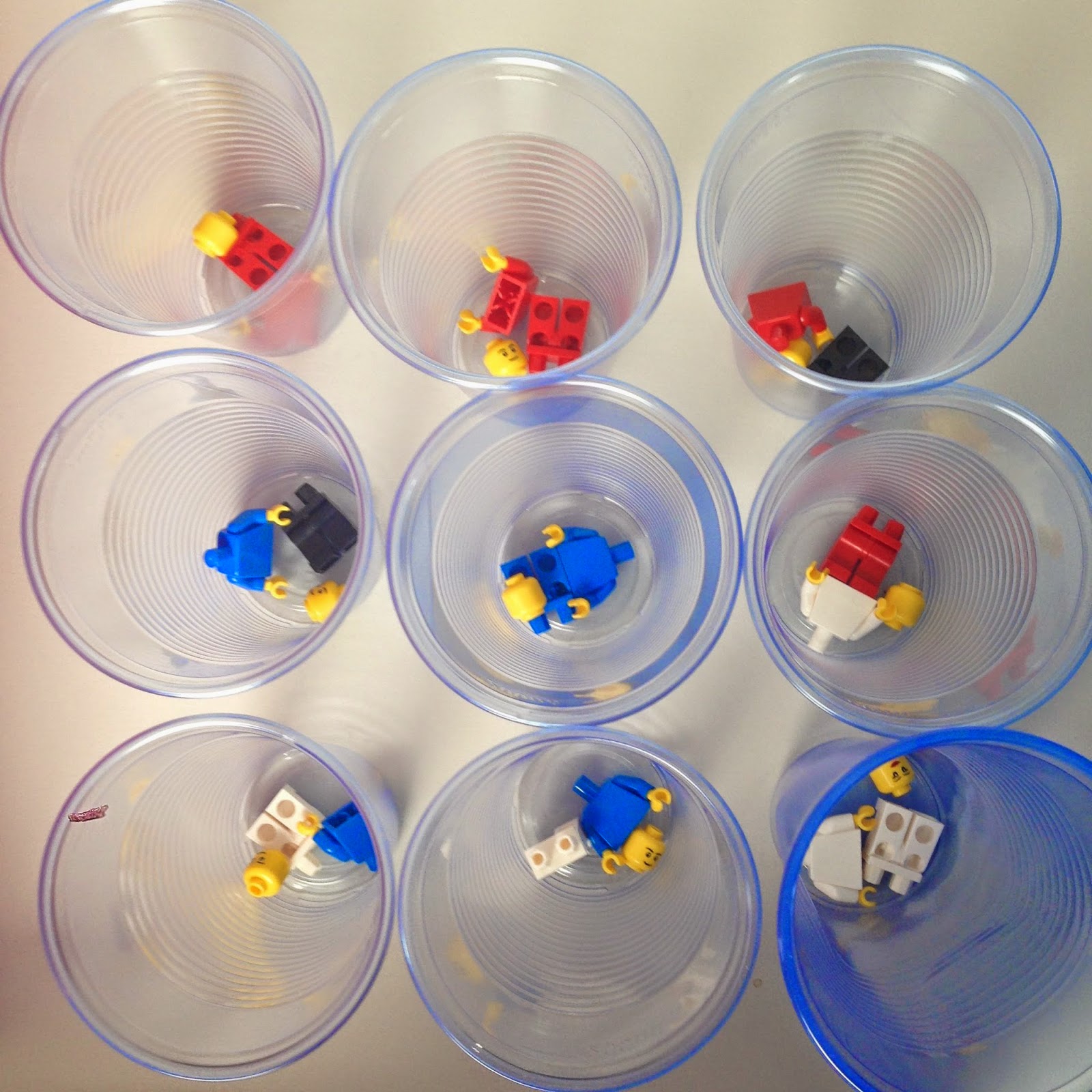
After students had taken down notes about several key events of Gandhi's life, it was time to play with Lego! We only got through a few early events, as we had only one period, but students had to select one, using their notes, to recreate with Lego Bricks.  Students were told they would be given a base plate, two mini-figures and a selection of bricks. They nearly all chose to recreate Gandhi's first lesson in non-violence, where he stole gold from his brother, but then admit it, realising the potential of truth telling and being principled.

Here are some of the fantastic creations students made:


I was so impressed with the scenes they recreated and it shows how incredible their imaginations are!

Mrs. Jones spent some time interviewing the students about their scenes and also how they felt working with Lego. My favourite response was "Lego made the lesson and learning more fun...not that it isn't fun already."
This was a really fast paced lesson and the students got through way more than normal! They were all engaged and every student participated in the activity and class discussion. They were also all able to succeed!
In their next lesson students will pick three key scenes from Gandhi's life and will create models of them.They will photograph them and put them onto a presentation in Google Slides or Keynote and will present them to the class. We will also get them to record themselves talking about the scenes!


Friday, 26 September 2014

Lego Learning Project

I am very lucky to work in a school where we are not judged on short lesson observations, but on a long term research project. Last year I took part in a research project using Google Forms which you can read about here and here. This year I will be taking part in a project with one of my colleagues Mrs Jones (Michelle) using one of our favourite things...LEGO!

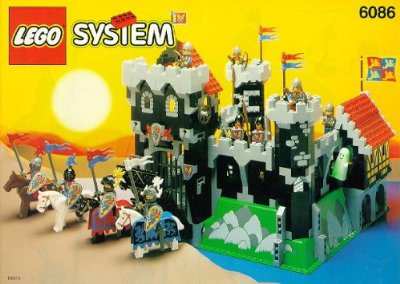
Lego has always been an incredibly popular toy and was very important in my life growing up...as it was in my mum's, dad's, brothers', friends'.... There is nothing that could make more excited as a child than getting a new Lego set, like my favourite Lego Castle. As an adult I don't think I have matured much as I still get as excited when I treat myself to Lego, (most recently a trip to Legoland, a Lego Calendar and a Lego City fireman set). As a teacher we are constantly trying to engage our students by making them excited about learning, so what better tool to use than Lego!

I used Lego a little bit last year, and have large storage Bricks and a Lego head full of Lego Bricks in my classroom. I've done a few small lessons, where I've set mini creation challenges or have had students playing team building games using Lego. However - it is now time to get serious!

I've collected Lego resources in this Pinterest folder and here on Google Drive. However we really want to focus on creating our own resources. Most of the resources available online are aimed at very young children, so we want to make resources suitable for secondary schools. We also will use some of the educational kits created by Lego, including the wonderful StoryStarter Kit. However, we may not use the educational kits in the way they are intended to be used - I assume Lego have some pressure on them to create educational kits which come with full teaching resources, but this can sometimes be restrictive, and don't always show the full potential of the kits. Often the kits aimed at older students are Mindstorms/Technics, but I want to mostly focus on using the traditional bricks in my teaching.


Michelle has some incredible ideas already and we are doing some work this week with our grade 6 students. They are doing a biography unit in English and Humanities and this week will be looking at the life of Gandhi. We will be using the StoryStarter Kits to show significant parts of his life - students will photograph several scenes and then they will present them to the class!

Last week, with the same grade, I also completed a few coding classes without computers. They loved the lesson and were so engaged. I am doing a town planning  unit later with an older grade and went to design a town, using different coloured and shaped Lego Bricks to symbolise different types of town. I'm doing another unit where students are designing a theme park, and we will be using LegoLand as a case study. I have purposefully planned only four units for each grade this year, so that I have a few weeks spare to throw in a mini unit - I want to use this to really focus on different approaches to learning, with a heavy influence on research - here I will get some students to complete research records about the history of Lego - I may also get another grade to work towards a debate with the motion "This house believes Lego shouldn't have introduced Lego Friends". (Michelle is also planning a gender unit next year, and I am trying to get her to talk about Lego advertising, Lego Friends and even Lego MiniFigures becoming gendered).


Our reading list so far:

I bought this already - Michelle is basically already doing everything in this book!


This book is great and gave me wonderful ideas for my little Lego challenges last year.


and finally...we may need


You will see lots of updates here! I am hoping to connect with other educators to share resources and ideas - if you are a teacher who uses Lego, please get in touch with me through Google+ or Twitter.

Thursday, 11 September 2014

Contextos Globales

A colleague has sent me some translations for our Global Context posters, so now we have Spanish versions!


Posters with blank space, (to write subject/unit specific details)

Google Classroom Teacher and Student View

A quick video we made in the summer holidays. I will update it soon and will include some feedback from both my peers and students. It's funny how much you learn just by using something-this video was pretty much shot in the dark, but will hopefully give you some useful information about Google Classroom.

Google Classroom Issue

I came back las night after a busy and tiring school residential, feeling sickly and worn out. As the wifi at our centre was broken I was unable to look at a piece of homework my grade 8s had done. Eagerly I went onto Google Classroom, only to see this:


 0 students had completed their homework - I was devastated!
  Actually I assumed it was an upload problem, as a few students were having issues with this, as you have to text search Google Drive for a folder you want to upload, you can search for it, by going into folders!
I immediately emailed students reminding them to upload it.


Straight away one of my grade 8s emailed me this:


I went straight into my 'Classroom' folder in Google Drive to find that my wonderful grade 8s had not failed me, but that everyone of them had done their work!

We are some of the first people to try Google Classroom and we often discuss ways we would improve it. As a teacher I also share my 'teacher view' through screen shots, or on my Apple TV and also have them share theirs. Students know that Google Classroom is new and developing, which not only gives them more patience when something goes wrong, but excites them, as they feel it is quite a privilege to be one of the first guinea pigs!

Also Google Classroom is not perfect yet, but we can see what it will be able to do and are very excited about it.


Friday, 5 September 2014

Pretty Google Forms + Reading Survey

I am so happy Google have bought out new templates! I hope that they will do this for Slides too, as they are all dated/naff, (I usually upload my own background images, so it looks a bit nicer)

Here is a copy of a reading survey I have made for my students. I intend on sending it out next week. What other questions should I include?


So pretty!

Wednesday, 3 September 2014

The Next Chapter MYP Global Context

The International Baccalaureate is changing! We have moved into the MYP next chapter. One of the main changes that has happened is that we are dropping the old Areas of Interaction in favour of 'Global Context'. We use these Global Context as a way to approach everything we teach and choose one to focus on for every unit. Students also use these for their Personal Project.

My fancy-pants graphic designer boyfriend Rob has created some fantastic posters for our school!


We have created two versions - one with a description of the Global Context and another with a blank space for teachers to fill in themselves. You can download them here and here.